Why Are My Eyes Red When I Wake Up?
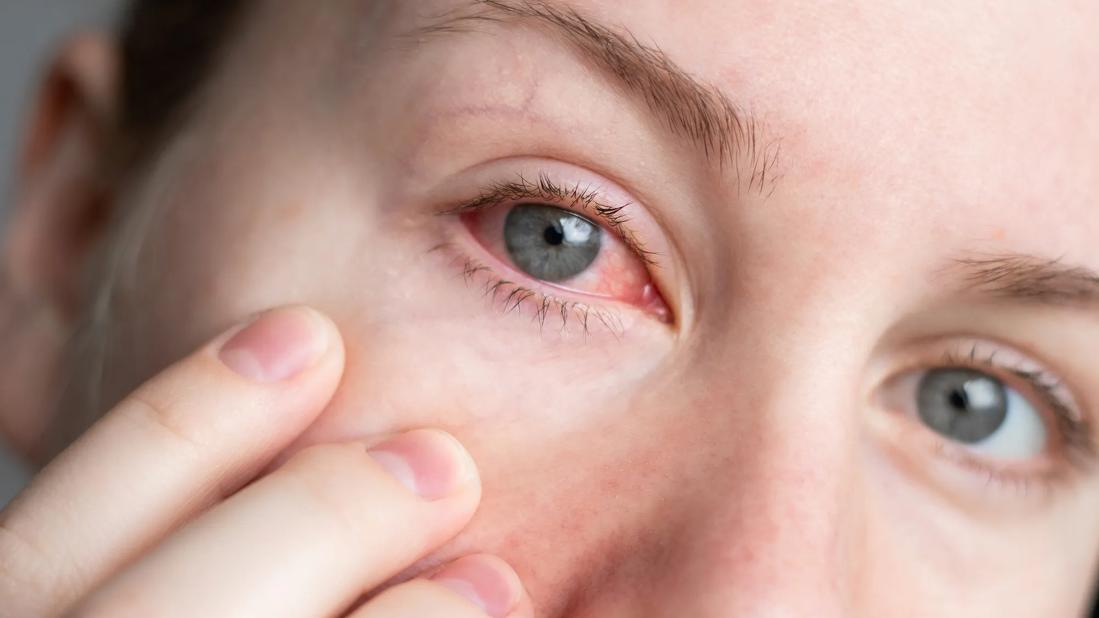
Waking up with red eyes never feels great. Often, the redness goes away on its own throughout the day. But if it pops up with pain, discharge or other symptoms, you might want to have it looked at.
Advertisement
Cleveland Clinic is a non-profit academic medical center. Advertising on our site helps support our mission. We do not endorse non-Cleveland Clinic products or services. Policy
“More serious symptoms can lead to long-term vision loss, so anytime you have an issue with your eyes, it’s best to ask an eye specialist,” says optometrist Wes Immler, OD.
Serious symptoms include:
- Redness that doesn’t go away with eye drops or within a few days
- Eye pain that’s severe or lasts all day or for multiple days
- Discharge
- Light sensitivity
- Vision changes, like blurred vision or vision loss
- Other symptoms, like fever, headache, nausea or vomiting
Dr. Immler explains what could cause these and other symptoms.
Waking up with red eyes
From allergies to injuries, there are a few reasons why you might wake up with bloodshot eyes. Here are the most common causes and tips for relief.
Allergies
If you wake up with itchy, swollen, red eyes (and sometimes, white, stringy discharge), you’re likely dealing with allergies. These symptoms stem from your body’s immune system response to different allergens, like:
- Dust mites
- Pet dander
- Ragweed
- Pollen
- Mold
“I’ve had a lot of people complain about red eyes and allergies in the morning, and they tell me their pets were sleeping in their bed or on their pillow,” shares Dr. Immler. “Anytime your eyes come into contact with an allergen, and you don’t wash your face before bed, you run the risk of having an inflammatory response.”
Lack of sleep
A lack of sleep can lead to reduced tear production and increased blood flow to your eyes, causing dryness and a red, bloodshot appearance.
“Red eyes from a lack of sleep will usually clear up with rest, along with lubricating eye drops,” says Dr. Immler. “The recovery doesn’t usually take long, and the redness can get better within a few hours to a day.”
Eye strain and computer vision syndrome
The longer you stare at electronic screens, the less you blink. That’s a problem because blinking refreshes the tear film that keeps your eyes moist and protected. So, the less you blink, the drier and redder your eyes can become.
“The more time you spend on a device, the more symptomatic you are,” says Dr. Immler. “Dry eye symptoms like redness don’t heal immediately, so these problems can persist and continue into the next day or for several days until they’re treated.”
Sleep apnea and CPAP machines
Continuous positive airway pressure (CPAP) machines are the No. 1 treatment for sleep apnea. CPAP masks fit around your mouth or nose to help you breathe well continuously throughout the night. But if the mask doesn’t fit tightly enough or there’s a leak in the cushion, air can get pushed up into your eyes. As a result, they can dry out and look red when you wake up.
Uveitis
Uveitis is an inflammation of the middle layer of your eye, which leads to:
- Blurred vision, decreased vision or floaters
- Light sensitivity
- Red eyes
- Irritation and eye pain
“Uveitis is a serious condition, as it can lead to permanent eye damage if it’s not treated,” warns Dr. Immler. “It’s often related to an underlying autoimmune or inflammatory condition.”
Floppy eyelid syndrome
This condition, which is more common in men and people who have overweight, worsens based on your sleeping position. If, for example, you tend to sleep face-down in your pillow, your eyelids can sag and rub on the pillow all night — and sometimes, even turn inside out.
“If your eyelids are more elastic and they get irritated while you’re sleeping, you can wake up with red, swollen, inflamed eyes,” states Dr. Immler. “These symptoms tend to be worse right after you wake up.”
Entropion
Entropion also affects your eyelids. As you get older, your eyelid can turn inward, causing your eyelashes to rub on the surface of your eye. Understandably, this causes discomfort, itching and teary, red eyes.
Subconjunctival hemorrhage
A subconjunctival hemorrhage is a classic example of bloodshot eyes. It happens because of a broken blood vessel on the white part of your eye, usually caused by increased pressure. It isn’t typically painful and tends to go away on its own.
“You might wake up with just one section of your eye completely red, or the entire white part of your eye could be red,” illustrates Dr. Immler. “It happens a lot with coughing, sneezing, bending or lifting. People wake up with it because they’re usually rolling over in the night, rubbing their eyes or straining in some way.”
Acute angle-closure glaucoma
Acute angle-closure glaucoma leads to red eyes, swelling and severe pain. The fluid in your eye doesn’t drain properly, which causes an intense increase in pressure.
“The eye pressure from this type of glaucoma is very painful and can cause you to lose vision fairly quickly,” states Dr. Immler. “The pressure can be so great that it even causes headaches, nausea and vomiting.”
Rheumatoid arthritis
Rheumatoid arthritis is an autoimmune disease that can affect your entire body, including your eyes. Your body’s immune system starts attacking healthy cells, causing excessive inflammation.
“A lot of conditions that affect the body also affect the eyes,” says Dr. Immler. “If you can get inflammation in your joints, you can also get inflammation in your eyes, which can cause chronic redness, pain and light sensitivity.”
link