Michigan public health labs try to adjust after loss of federal funds
New equipment and staff meant building out capacity for more long-term disease surveillance — a “testing infrastructure,” said Christine Harrington, health officer of the Saginaw County Health Department. After all, she said, strong local labs are crucial to blunt diseases before they become large-scale outbreaks. They are also critical testing sites in intentional crises, like the anthrax attacks of 2001, she said.
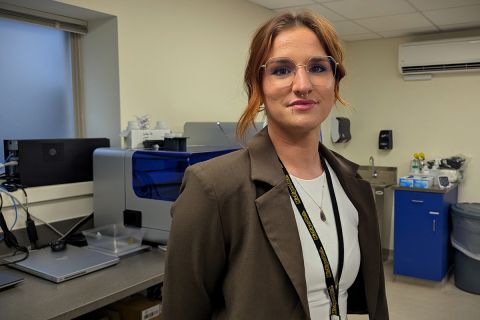
Lab tech Penny Nowlin walked through the Health Department of Northwest Michigan’s lab recently here in Gaylord, a northern city that welcomes countless visitors to its restaurants and other attractions each year to escape city life — visitors that depend on safe drinking water and clean waterways.
In one room, machines hummed, plunging pipettes in and out of test tubes as part of an effort to check for pathogens in drinking water.
Elsewhere, the lab rooms were dark.
In March, the federal notice of cuts arrived in inboxes just Nowlin and thousands of local residents reeled from a freak ice storm that sent tree tops crashing into front yards and across roads and plunged much of the area in a power outage. When she and other lab staff returned to the office, the years of planning had been upended.
Nowlin holds out hope that the expanded lab will be online again soon. For now, she said — her eyes sweeping the unused equipment — it’s “collecting dust.”
Elsewhere, public health leaders told Bridge that the COVID-era funding would have helped speed up water quality testing for residents’ well water or in systems that serve local restaurants, for example. Health departments in Oakland County and the western Upper Peninsula were testing for latent tuberculosis; Oakland was checking for polio in the wastewater. Saginaw County was in process of onboarding mosquito pool testing in a multicounty effort to tamp down mosquitos and check for diseases among them, according to state officials.
Regional labs in 2024 conducted nearly 250,000 tests for sexually transmitted diseases, blood-borne pathogens, respiratory pathogens, water safety, and drug abuse for treatment court participants, for example, a state health department spokesperson told Bridge.
Janenne Pung, director of community health services for the Health Department of Northwest Michigan, said she was not prepared to discuss specifics of the tests that the department had decided to focus on, because details hadn’t been finalized.
“It was something that we were looking into — what tests should we be doing? What tests can we be doing? What does the community need?” she said.
link