Long-lived Greenland sharks may point to new approaches for retinal disease | Ophthalmology Times
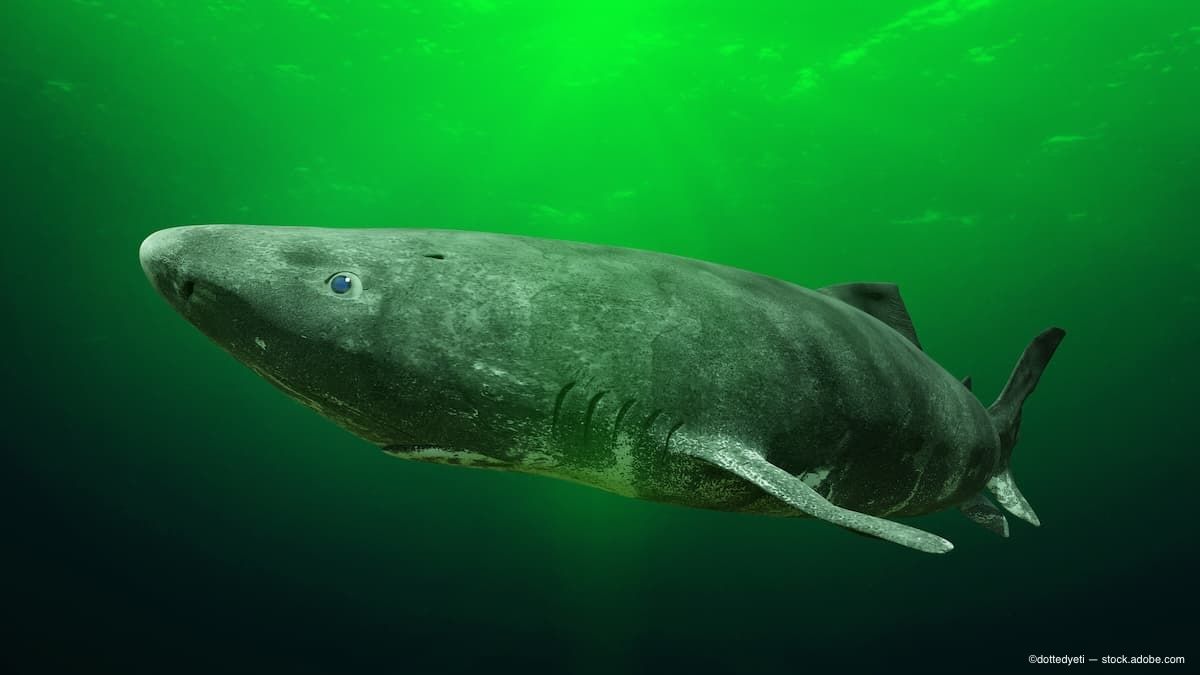
The University of California (UC), Irvine issued a press release describing the identification of a DNA mechanism that enables Greenland sharks to maintain their vision over centuries.
Dorota Skowronska-Krawczyk, PhD, a UC Irvine associate professor of physiology and biophysics and associate professor of ophthalmology at the School of Medicine, and coauthors Walter Salzburger and Lily G. Fogg, from the University of Basel, Switzerland, published their findings about a DNA repair mechanism in these sharks in Nature Communications.1 The evidence suggests that this mechanism “enables these sharks—some of which live for 400 years—to maintain their vision over centuries with no signs of retinal degeneration and that they are well adapted to extreme low-light conditions,” according to the press release.
The authors commented, “The absence of obvious signs of retinal degeneration is remarkable given that even in healthy aging, vertebrate retinas (including those of humans) undergo progressive photoreceptor loss and DNA damage over time.2 For example, at published rates of age-related rod loss (approximately 0.2%-0.6% per year), a human living to 400 years of age would be expected to lose over 50%-90% of their rod photoreceptors.”3-5
In their article, the authors explained that “Due to its extreme lifespan, harsh environmental conditions, and prevalent corneal parasitization, the Greenland shark [had] previously been thought to have impaired or degenerated vision.”
What they found, however, was quite the opposite. The investigators presented genomic, transcriptomic, histological, and functional evidence that the Greenland shark retains an intact visual system well adapted for life in dim light.
They reported, “Histology and in vitro opsin expression revealed visual adaptations typical of deep-sea species, including densely packed, elongated rods and a short-wavelength shift in rod visual pigment sensitivity compared to shallow-water sharks. In situ hybridization confirmed the presence of essential visual cell types: rods, Müller glia, and bipolar, amacrine, and ganglion cells. Moreover, despite being over a century old, the examined specimens showed no obvious signs of retinal degeneration.”
The researchers also found that the rods were intact and robustly expressed, whereas the cones were “pseudogenized” and/or no longer expressed.
Importantly, they described finding “robust expression of DNA repair–associated genes in the retina, which may help support long-term maintenance of retinal integrity over the Greenland shark’s extreme lifespan.”
Coauthor Tom noted, “We can learn so much about vision and longevity from long-lived species like the Greenland shark, so having the funds to do research like this is very important.”
For Skowronska-Krawczyk, the study findings may facilitate the discovery of new ways to prevent age-related vision loss, as well as eliminate diseases such as macular degeneration and glaucoma. In addition, the findings may lead to further questions about how vision evolves, the mechanisms that help keep tissues alive and healthy for many years, and how to apply this knowledge to humans, she noted.
References
-
Fogg LG, Tom E, Policarpo M, et al. The visual system of the longest-living vertebrate, the Greenland shark. Nat Commun. 2026;17(1):39.
doi:10.1038/s41467-025-67429-6 -
Narasimhan A, Min SH, Johnson LL, et al. The Ercc1-/Δ mouse model of XFE progeroid syndrome undergoes accelerated retinal degeneration. Aging Cell. 2024;24(3):e14419.
-
Gao H, Hollyfield JG. Aging of the human retina: differential loss of neurons and retinal pigment epithelial cells. Invest Ophthalmol Vis Sci. 1992;33(1):1-17.
-
Curcio CA, Millican CL, Allen KA, Kalina RE. Aging of the human photoreceptor mosaic: evidence for selective vulnerability of rods in central retina. Invest Ophthalmol. Vis. Sci. 1993;34(12):3278-3296.
-
Curcio CA, Drucker DN. Retinal ganglion cells in Alzheimer’s disease and aging. Ann Neurol. 1993;33(3):248-257. doi:10.1002/ana.410330305
link