


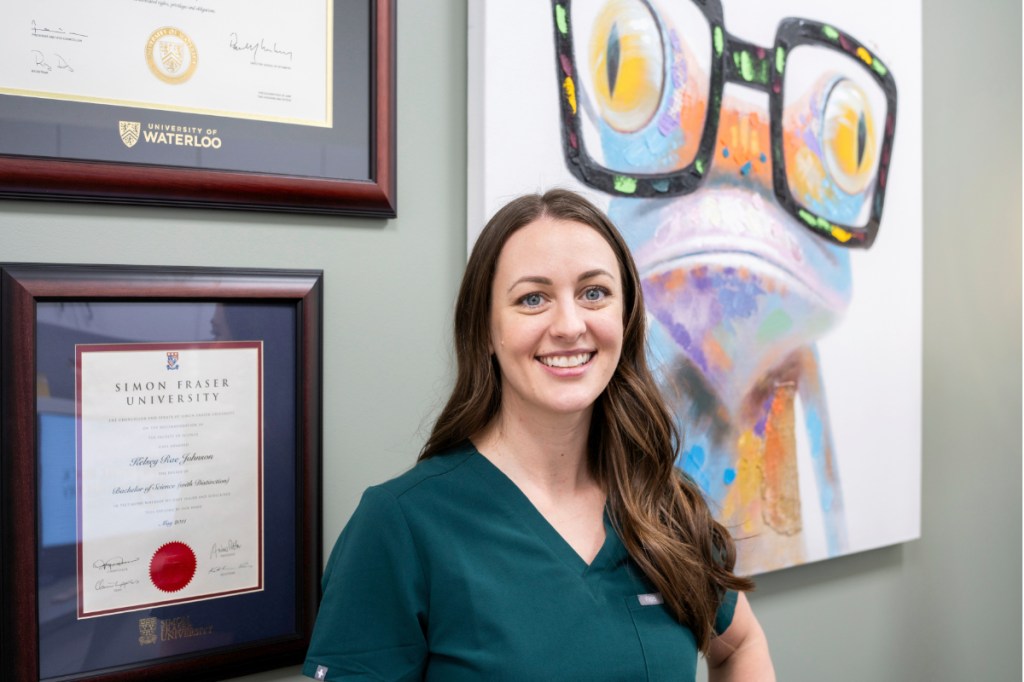
Seeing dry eye clearly: How White Rock Optometry is treating the root cause
Published 6:00 pm Sunday, February 8, 2026
Clinic offers advanced therapies to address underlying causes of dry eye
Dry eye is often dismissed as a minor irritation, but for many people, it’s a chronic condition that quietly disrupts daily life.
Optometrists at White Rock Optometry approach dry eye differently: as a complex disease that deserves proper assessment and long-term care.
“People are often surprised to learn how common dry eye really is,” says Dr. Kelsey Snow, “Aging, hormonal changes, medications, contact lens use, environmental factors and especially screen time all play a role. When we’re on screens, our blink rate drops significantly – and that can trigger or aggravate symptoms.”
While symptoms can vary widely, grittiness, burning, stinging, fluctuating vision and excessive watering are all common. “Watery eyes are actually one of the most misunderstood signs,” Snow says. “People think, ‘my eyes are watering, so they can’t be dry,’ but that’s often not the case.”
“We’ve had patients using eye drops 10, 15, even 20 times a day … just to get temporary relief. When a dry eye is all you’re thinking about, it interrupts your entire day.
Just as important is understanding that symptoms don’t always reflect severity. “You can have very mild discomfort but significant signs of dry eye that we see during an exam,” Snow says. “Catching it early is critical, because early treatment can prevent symptoms from getting worse over time.”
While at-home care like warm compresses, lid hygiene and artificial tears can help manage symptoms, White Rock Optometry also offers advanced therapies designed to address the underlying cause of dry eye.
Two of those treatments are Intense Pulsed Light and Radio Frequency. “IPL is a non-invasive, light-based treatment that reduces inflammation contributing to dry eye,” Snow explains. “It originated in dermatology and has been adapted specifically for eye care. RF works alongside it to target the root of the problem, rather than providing temporary relief of symptoms.”
The difference can be life-changing. “We’ve had patients using eye drops 10, 15, even 20 times a day – sometimes every half hour – just to get temporary relief. When a dry eye is all you’re thinking about, it interrupts your entire day. Seeing someone reduce their drop use to just a few times a day, or eliminating them altogether, is a huge quality-of-life improvement.”
Lifestyle still matters. Staying hydrated, eating omega-3-rich foods like salmon, nuts and seeds, taking regular screen breaks, and following the 20-20-20 rule – every 20 minutes, look at something 20 feet away for 20 seconds – all support eye health.
Ultimately, the message is simple: dry eye is manageable – but only when it’s properly assessed. “The most important step is seeing an optometrist. Early diagnosis and the right treatment can change everything.”
To learn more about protecting your vision or to book an appointment, visit whiterockoptometry.com or call 604-536-4999.
link