


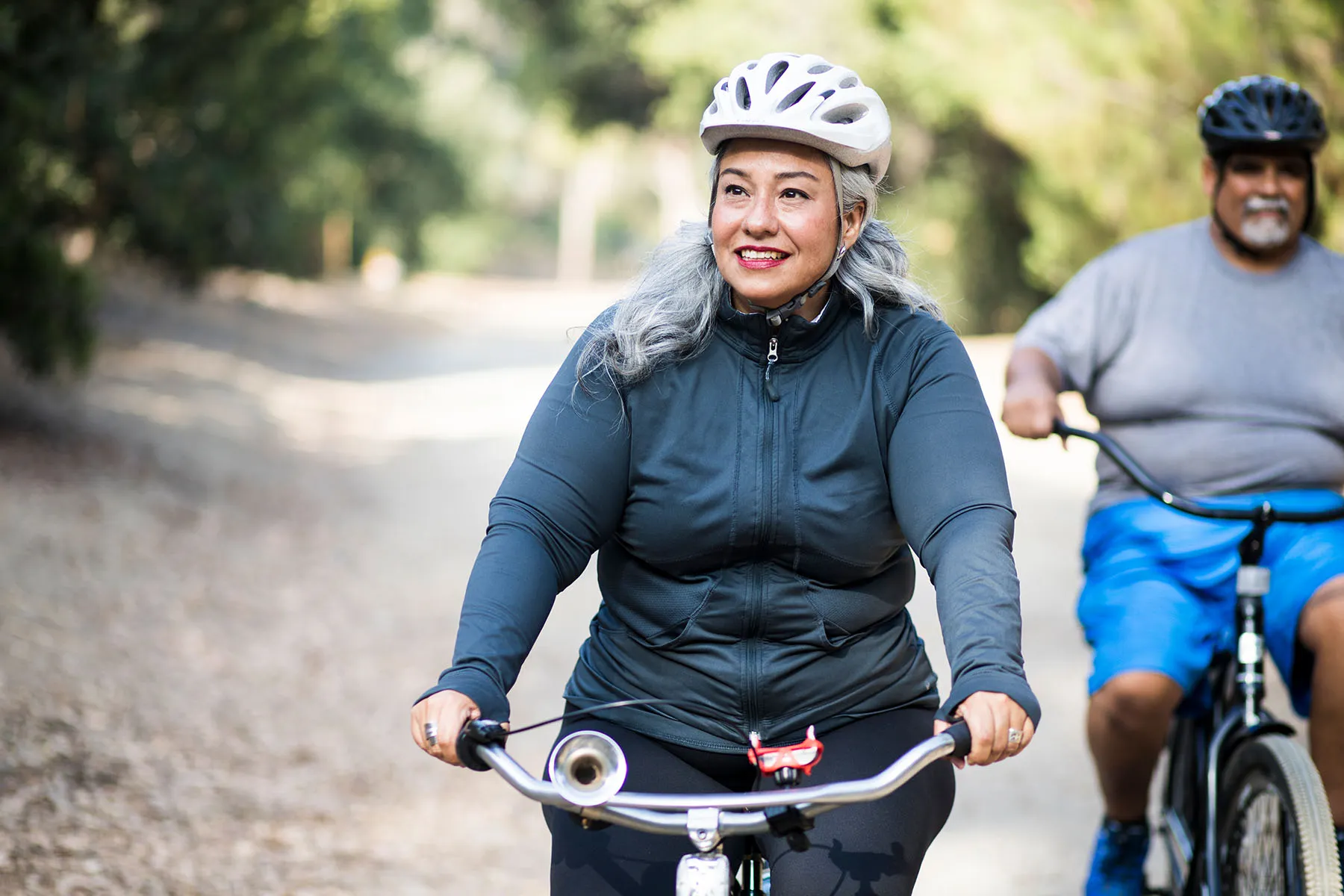
When you have obesity, finding the right balance between accepting yourself as you are and taking steps toward better health is tricky. Obesity simply means you have more body fat or a higher body mass index (BMI). You may or may not have other related metabolic health problems, including type 2 diabetes and cardiovascular disease. But obesity’s effects on your life and experiences can go much deeper, affecting not just your physical health but your mental health as well.
As you look ahead to your future, you may wonder where to start. The answer to that question is complex, says Shiara Ortiz-Pujols, MD, MPH, medical director of obesity medicine at Northwell Health in Staten Island, New York.
“It requires a lot of different steps,” Ortiz-Pujols says. “A lot of people have been struggling with weight for much of their lives, especially if they’ve been doing it since adolescence. There was likely a lot of bullying, a lot of assumptions that may have even affected a lot of opportunities. There’s a certain amount of trauma that comes from all of that weight bias that leads to internalized stigma and almost self-hatred. Often people come to me and they’re feeling almost hopeless. Many people will not even seek routine preventive care because often when they’ve gone to a doctor, the first thing that comes out of the doctor’s mouth is, ‘You need to lose weight,’ and oftentimes they don’t feel heard.”
Step One: Overcoming the Past
Destiny Murtaugh is a confident influencer today, known for her posts about body image, confidence, and self-love. But she remembers growing up in the early 2000s in a house that was heavily steeped in diet culture.
“I feel like I was just a product of the time,” Murtaugh says. “Skinny was such a huge thing. We were seeing heroin chic and stuff like that in the media.” In her own family, value was and is placed on being thin. “We haven’t really fulfilled our lives or reached a pinnacle if we’re not skinny, if we’re still a bigger person. And that definitely stems from an intergenerational trauma of body image and disordered eating.… It’s cyclical.”
Murtaugh says those early messages about her body and her diet got ingrained into her psyche. As a result, she grew up in a “very disconnected state” with herself. When she started gaining weight rapidly in school after taking medicines for migraine, other kids bullied her. She started to look for ways of coping and losing weight that weren’t healthy or sustainable.
Step Two: Tackling Internalized Bias
These deep-seated beliefs and troubling experiences around weight are all too common. They’re also known to get in the way of improving your health later in life. One study looked at nearly 14,000 adults who were enrolled in a program to manage their weight. The study participants filled out a survey to measure their internalized weight bias. They gave scores from 1 (strongly disagree) to 7 (strongly agree) to statements such as, “I am less attractive than most other people because of my weight.” The study explored connections between those negative thoughts around weight and changes in weight, healthy behaviors, well-being, and quality of life.
“People with higher levels of internalized weight bias had lower odds of weight loss, higher odds of weight gain, and poorer weight management behaviors,” says Rebecca Puhl, PhD, a clinical psychologist who studies weight bias at the University of Connecticut Rudd Center for Food Policy & Health in Hartford, Connecticut, who was involved in the study. “And these findings persisted after controlling for participants’ BMI and sociodemographic characteristics. So this shows that internalized weight stigma is potentially creating barriers for adults engaged in weight management.”
Step Three: Reframing Your Health Goals
Ortiz-Pujols says it can help to find a doctor who will empower you to speak. Look for spaces where others are speaking in a more positive way. She recommends the Obesity Action Coalition as a good resource to get you started. It can help to begin to understand obesity as a chronic disease and relapsing condition as opposed to “something that you did to yourself.” You may need to take time to unpack your thoughts and where they’re coming from. Recognize that the number you see on the scale, or your BMI, is an imperfect and limited way to think about your health.
“BMI is a very one-dimensional measure,” Ortiz-Pujols says. “It looks at weight divided by height. It doesn’t tell you anything about where the fat is. It doesn’t tell you anything about whether you’re a man or a woman. It doesn’t tell you anything about whether it’s fat or muscle tissue, or take into account racial differences.”
Ortiz-Pujol likes to have her patients consider familiar athletes whose BMIs are clearly in the obesity range and yet no one would ever consider them unhealthy. Your BMI is just a single number. Rather than focusing on your weight, consider other kinds of goals that may have more meaning for your health.
“A lot of our conversation is trying to reframe goals, and not have them be strictly numerical or strictly married to the BMI,” Ortiz-Pujol says. “We’ve got to look at what’s going on with their cholesterol, what’s going on with blood sugar, what is going on with other possible health conditions.”
Step Four: Small Weight Losses, Big Health Gains
She says it’s also important to consider other factors, including your age. A young adult will look different and should have different goals than a person who is middle aged. Try to avoid obsessing over the number you see on the scale and your BMI in favor of many other markers of your health. Set goals you can achieve.
“Chasing that ideal weight is really difficult,” Ortiz-Pujol says. “It may not always be achievable.”
It’s possible to improve your health even without any weight loss. But as a starting point, Ortiz-Pujol likes to encourage people to consider the benefits that come with losing just 5% of their total body weight. While that amount of weight loss may not seem significant, it can come with outsized improvements for other aspects of your health.
“If you lose 5% of your total body weight, you’re reducing your risk for diabetes by 50%,” she says. “If you lose 10% of your total body weight, you’re decreasing your risk for diabetes by 80%, not to mention reducing the risk for fatty liver, for kidney disease, sleep apnea, and all these things, right? So when you think about 5% and 10% for an individual, that’s really not a lot of weight. For someone who weighs 200 pounds, it’s only 20 pounds, and, you know, people can’t get discouraged [thinking] that’s all I lost. In reality, they’ve accomplished tremendous benefits for their overall health.”
Step Five: Remember Your Mental Health
Don’t forget to take care of other aspects of your health, including your mental health. You may have depression or anxiety. You may benefit from therapy to help you find ways to cope and work through past trauma, Ortiz-Pujol says.
One approach to therapy is known as acceptance and commitment therapy. It’s a form of cognitive behavior therapy (CBT) that can help with anxiety, depression, stress, and more. This approach is focused on ways to cope with your negative thoughts, feelings, and sensations in your body through mindfulness. It also focuses heavily on acceptance. The evidence showing how well this approach works for people engaged in interventions to manage weight is mixed. What works for you may be different from someone else, and it’s important to consider your needs and goals in the context of your life as a whole.
For instance, Ortiz-Pujol says, you may have children you’re caring for or aging parents. You may be working a stressful job or going through perimenopause. Your life is likely complex and self-care is important. If, for example, you’re experiencing hot flashes or you’re not getting enough sleep, all of these factors will influence your mood. Your mood will affect all other aspects of your life, including your relationship with food.
“If your mood is all over the place because of life stressors or the very natural process of perimenopause [or for any other reason], those things need to be addressed.”
Step Six: Be Inspired
Look for sources of positive inspiration wherever you can find them. As you begin to find your balance, finding the motivation to improve your health gets easier. For Murtaugh, the journey has come full circle as she’s now found herself in a position to inspire others.
“When followers tell me that the content that I’ve posted has helped them be more confident in their own skin, that is such a surreal experience and it is such a privilege to think that I and the content that I just started making in my bedroom because I was feeling insecure and had benefited from people posting, to think that that’s now me,” she says.
link